


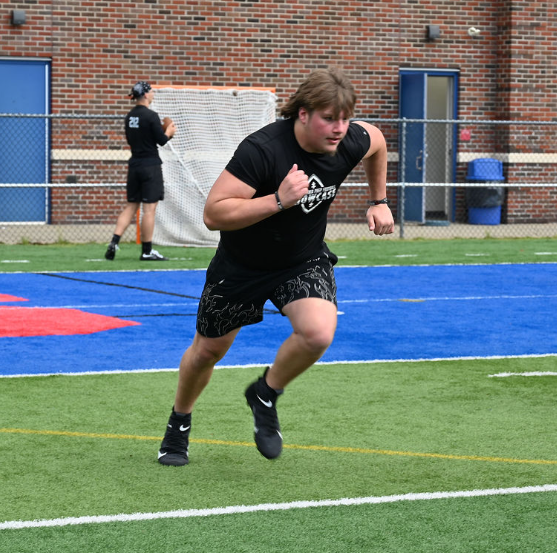
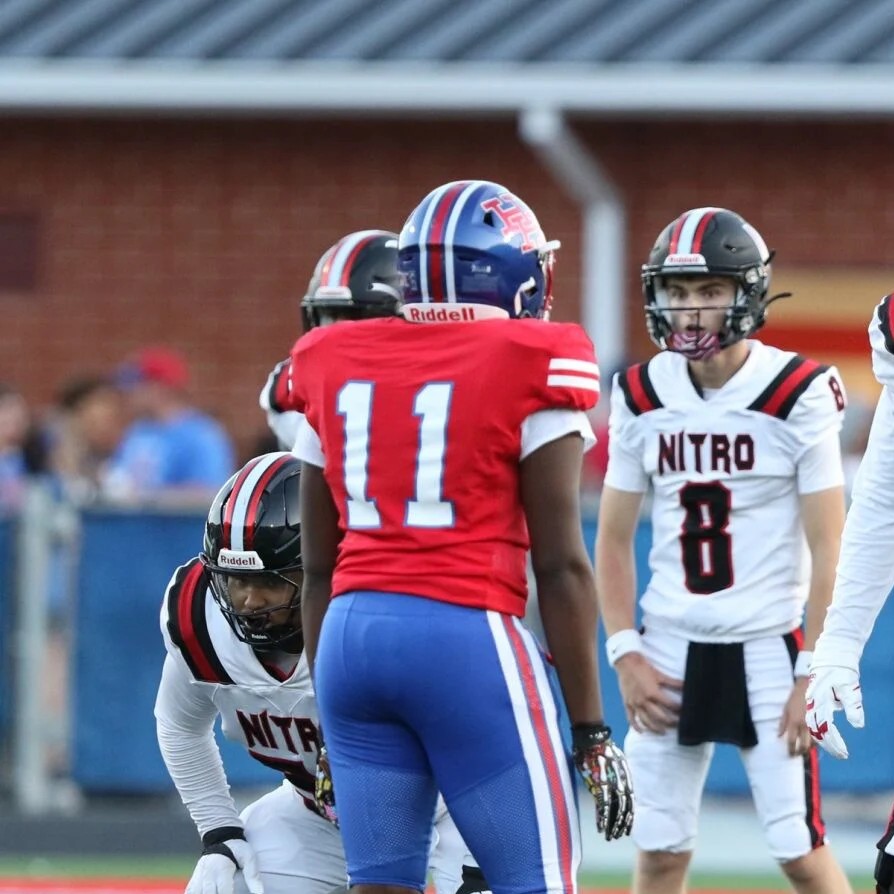
FEATURE PHOTO FROM CHARLESTON GAZETTE

Sign up for a C&C Event
Two-Ways
With the premium placed on offensive linemen at the next level, many defensive standouts project there—but several 2027 prospects clearly have the ability to play either side.
George Washington’s James Payne (6’4”, 275) headlines the group. Already the top-ranked offensive lineman, he would arguably sit at #1 defensively as well with his size, movement skills, and overall polish as an interior presence. Parkersburg’s Drey Grinter brings a massive frame with flexibility, giving him the ability to control the line on either side of the ball.
University’s Jack Gamble flashed high-level ability as a sophomore before missing 2025 due to injury, but his upside remains evident. Cabell Midland’s Keian Shelton, a tight end with high-level Division I offers, also shows legitimate defensive ability—his athleticism and size could translate well if a program chose to develop him there.
Big Bodies
Interior size still drives a lot of recruiting decisions, and this group features players who bring the frame and strength to control the middle.
Frankfort’s Anthony Smith had a dominant 2025 season anchoring a state championship defense. He combines height with mass and plays with strong leverage, consistently holding the point and disrupting inside. Bridgeport’s Tristin Noble brings a similar profile—good size, strong get-off, and the ability to maul in tight spaces.
Elkins features two notable interior bodies in Owen Stanley and Devin Hulver, both capable of clogging lanes and controlling the interior. Fairmont Senior’s Alex McGinnis and Wheeling Park’s Akeem Davis also bring size and strength that translate well to interior roles. Linsly’s Darryn McCormick stands out for his blend of size, leverage, and get-off, flashing the ability to become a true disruptor in the middle.
Pass Rushers
Edge pressure remains one of the most valuable traits, and several players outside the top tier consistently showed the ability to affect the quarterback.
Fairmont Senior’s King Abercrombie is a strong-bodied edge who uses a variety of pass rush moves to win, with the versatility to potentially slide inside. Wheeling Park’s Jake Franke brings a lighter, twitchy style with quick burst off the edge. Riverside’s Zion Christian was also capable of getting pressure from a variety of positions as well Huntington’s Antonyo Paschall off of the edge.
Pendleton County’s Ty Heavner was highly productive and brings a strong motor with a frame that offers upside. University’s Devon Williams and George Washington’s Jay Butcher both flashed athleticism—particularly in camp settings—that translated to production on film.
Other notable names include Spring Valley’s Isaac Maynard, who could be in line for a breakout senior year, Wahama’s Ian Fowler, Philip Barbour’s Sean Dent, and Princeton’s Isaias Selen, whose length and athleticism make him one of the more intriguing upside prospects in the group.
Interior
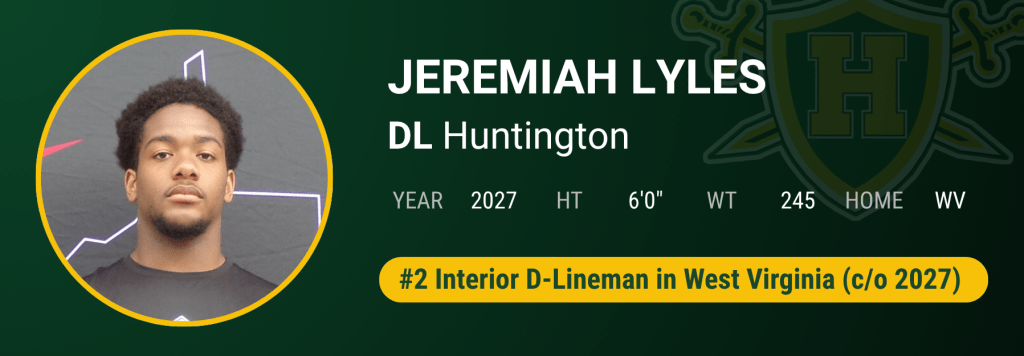
2. Jeremiah Lyles
Huntington’s Jeremiah Lyles (6’1”, 245) has been a consistent, battle-tested presence in the trenches for one of the state’s premier programs, and his development year over year has been evident. He’s added size without sacrificing mobility, which shows up in how well he plays through contact and maintains balance. Lyles wins with leverage and hands—he’s disciplined in striking first, staying low, and working through blocks rather than around them. His get-off is quick enough to stress interior linemen, and his motor keeps him involved well beyond the initial engagement.
What really stands out is how reliable he is snap to snap—he rarely gets washed out and consistently creates disruption, even if it doesn’t always show in the stat sheet. Heading into his senior year, he projects as a high-floor interior prospect who should draw interest across multiple levels, particularly from programs that value toughness and consistency inside.
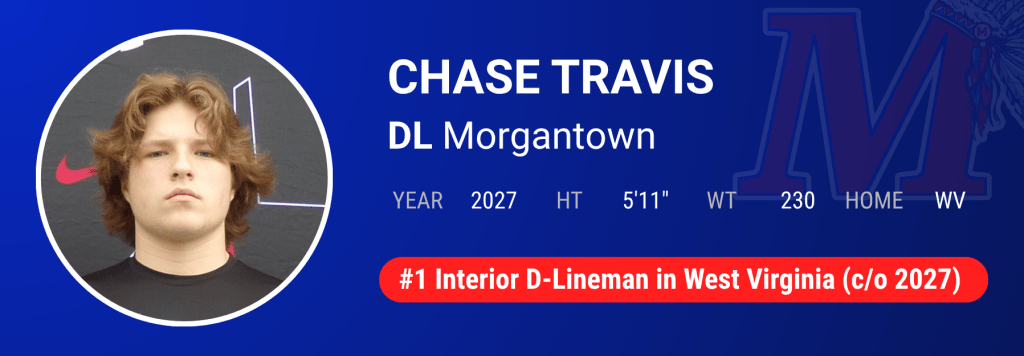
1. Chase Travis
Morgantown’s Chase Travis (5’11”, 230) is the definition of a disruptive interior presence and was a key factor on a state championship defense. Despite being undersized by traditional standards, he turns that into an advantage with elite quickness and leverage. Travis fires off the ball as fast as anyone in the class, often beating interior linemen before they can even get set. His low center of gravity allows him to win pad level consistently, and once he gains positioning, he’s difficult to move.
He plays with a relentless edge—aggressive, high-motor, and constantly around the football. Whether it’s collapsing the pocket, shooting gaps, or chasing plays down, he impacts the game in multiple ways. As he continues to add strength and size, his ability to translate to the next level becomes even more realistic, especially for programs that prioritize interior quickness and disruption over pure measurables.
Edge
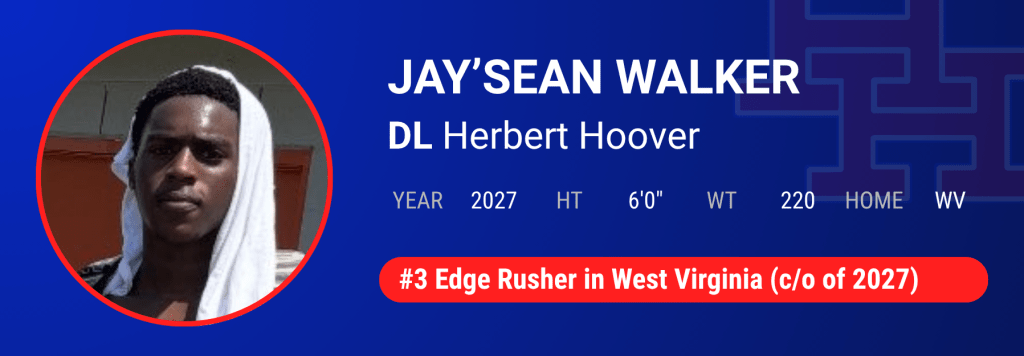
3. Jay’Sean Walker
Herbert Hoover’s Jay’Sean Walker (6’0”, 220) brings a speed-based edge profile with strong athletic traits. His first step and lateral quickness allow him to threaten the outside shoulder of tackles, and he shows good flexibility in his hips to bend and stay involved in plays that extend beyond the initial rush. He’s comfortable operating in space, which adds value in contain responsibilities and pursuit.
While he’ll need to continue adding size to hold up consistently at the next level, his length and reach help him play bigger than his frame. With continued development in his pass rush arsenal and strength, he projects as a productive edge with versatility.

2. Christian Hoosier
Williamstown’s Christian Hoosier (6’2”, 240) emerged as one of the more complete edge defenders in the class during 2025. He brings a strong physical presence with the length and build to hold up against both the run and pass. Hoosier combines effort with technique—he plays with good hand placement, understands leverage, and consistently does his job within the structure of the defense. His get-off is solid, and he pairs it with enough athleticism to win outside or work back inside.
What makes him particularly valuable is his versatility—he has the frame to add weight and transition into more of an interior role if needed, while still maintaining edge capability. That flexibility should make him a highly attractive option for next-level programs.
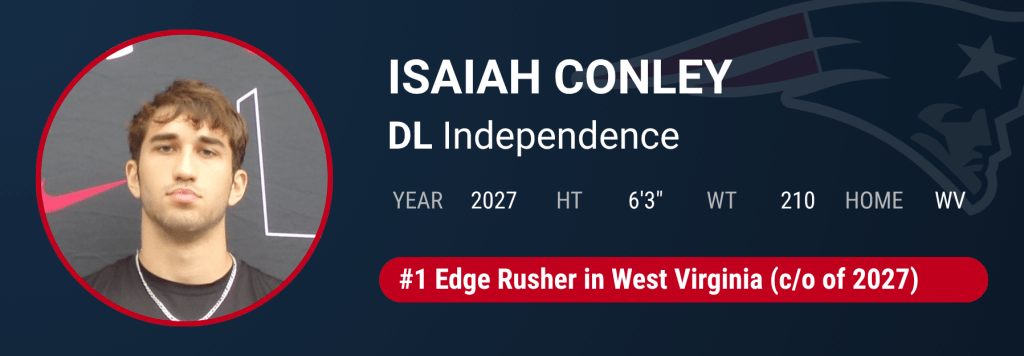
1. Isaiah Conley
Independence’s Isaiah Conley (6’3”, 210) headlines the group after a dominant season that included 20+ sacks. His production matches what you see on film—an edge rusher with length, burst, and a relentless motor. Conley excels at timing the snap and getting off the ball quickly, using long strides to eat up space and stress tackles around the edge. His length allows him to keep separation and finish plays, while his effort ensures he’s involved even when the initial rush doesn’t get home.
He consistently pressures quarterbacks and changes games from the edge. As he continues to add weight and strength to his frame, his ceiling rises significantly, with the tools to attract serious next-level attention.